Autism and Screen Time: A Complete Guide to Healthy Technology Use
Understanding why autistic children are drawn to screens and evidence-based strategies for finding healthy balance with technology.
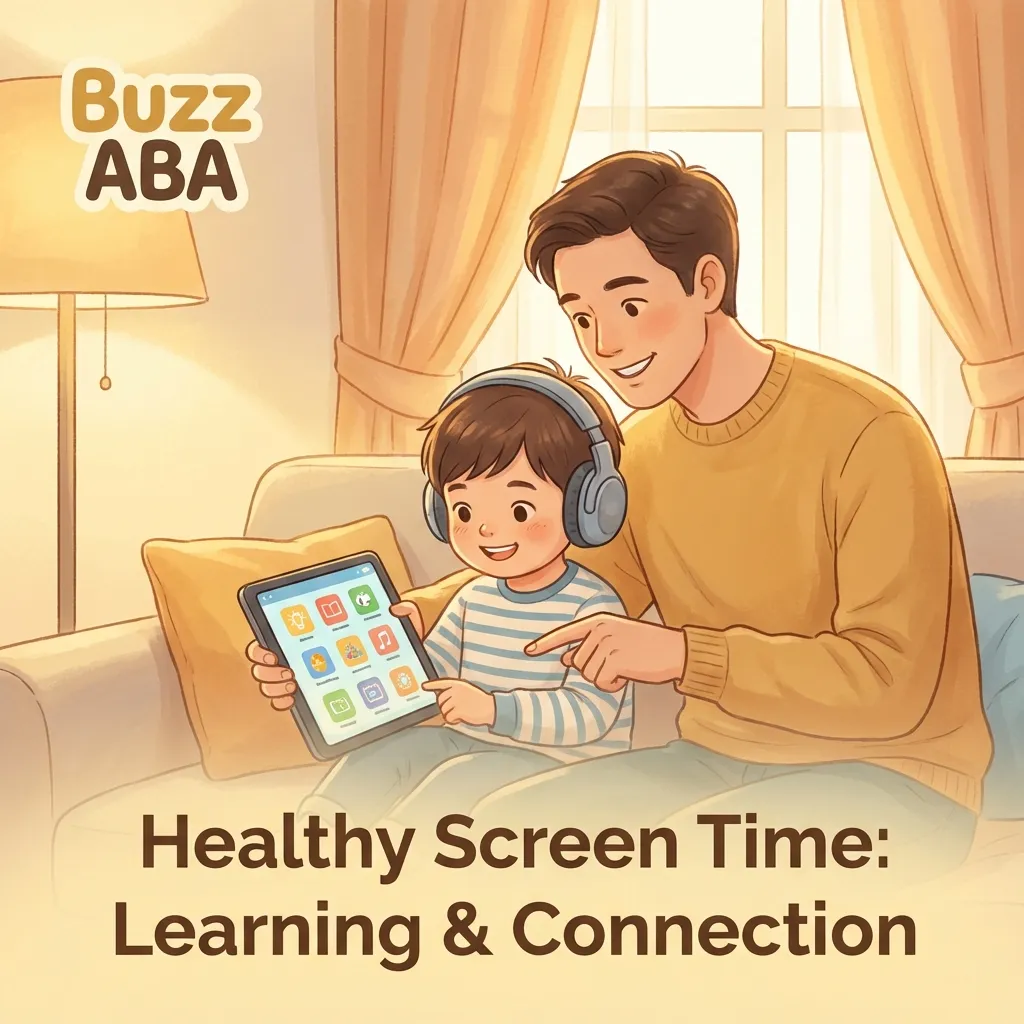
Screen time is a hot topic. Families of autistic children face real challenges. Intense focus on screens is common. It can be hard to set limits.
This guide offers a balanced view. We look at benefits and boundaries. The goal is healthy technology use.
Clinical Perspective: Finding Balance, Not Elimination
"I've worked with many families struggling with screen time, and I always encourage a balanced approach. For autistic children, screens can provide genuine regulation, learning opportunities, and connection. The goal isn't elimination but finding healthy boundaries that work for your family. At Buzz ABA, we help families develop individualized screen time plans that honor the benefits while building diverse engagement."
– Jennifer Harbour, M.S., BCBA, Clinical Director at Buzz ABA
Expertise in behavioral intervention and family support
Why Autistic Children Are Drawn to Screens
Understanding why screens are particularly appealing to autistic children helps us approach this topic with empathy rather than judgment:
Predictability and Control
Screens are consistent. The rules don't change. You are in control. This is comforting unlike the real world.
Reduced Sensory and Social Demands
Screens don't demand eye contact. They don't require social reading. This gives a break from daily demands.
Special Interests
Technology provides unlimited access to content related to special interests. Whether it's trains, Minecraft, or specific YouTube channels, screens offer deep engagement with preferred topics.
Visual Processing Strengths
Many autistic individuals are visual thinkers and learners. Screens provide rich visual stimulation that aligns with these cognitive strengths.
Potential Benefits of Screen Time
When used thoughtfully, technology can offer real benefits for autistic children:
Learning and Education
- • Educational apps and games
- • Visual learning opportunities
- • Self-paced skill development
- • Special interest exploration
Communication Support
- • AAC apps for non-speaking children
- • Visual schedule applications
- • Social story apps
- • Communication practice
Social Skill Development
- • Video modeling for social skills
- • Online communities with shared interests
- • Multiplayer games teaching cooperation
- • Less pressure than in-person interaction
Self-Regulation
- • Calming apps and videos
- • Downtime and decompression
- • Stress relief through preferred content
- • Sensory regulation tools
Potential Concerns
While screens have benefits, excessive or unmanaged use can present challenges:
- •Sleep disruption: Blue light and stimulating content can interfere with already-challenging sleep patterns
- •Reduced physical activity: Sedentary screen time may replace active play
- •Transition difficulties: Moving away from screens can trigger meltdowns or distress
- •Missed learning opportunities: Excessive passive consumption vs. active engagement
- •Social isolation: If screens replace rather than supplement social interaction
Creating Healthy Screen Time Boundaries
1. Focus on Quality Over Quantity
Rather than strict time limits alone, consider:
- Is the content educational, creative, or passive?
- Is your child actively engaged or zoned out?
- Does the content align with developmental goals?
- Are there opportunities for joint engagement?
2. Use Visual Supports
Make screen time predictable with visual schedules:
- Visual timers showing remaining screen time
- Schedule showing when screens are available
- First-then boards (first homework, then iPad)
- Countdown warnings before transitions
3. Create Screen-Free Zones and Times
Establish consistent boundaries:
- No screens during meals (family connection time)
- Screen-free bedrooms (supports sleep)
- Device-free times for outdoor play
- Screen breaks built into longer sessions
4. Teach Self-Regulation Skills
Help your child develop awareness and control:
- Practice noticing when they're ready for a break
- Teach body awareness (eyes tired? time to move?)
- Use apps with built-in break reminders
- Celebrate successful self-initiated transitions
5. Offer Compelling Alternatives
Make non-screen time engaging:
- Activities aligned with special interests
- Sensory play and physical activities
- Creative projects (art, building, music)
- One-on-one time with parents or siblings
Managing Screen Transitions
Transitions away from screens are often the biggest challenge. Try these strategies:
- Give plenty of warning: "10 minutes, 5 minutes, 2 minutes, 1 minute"
- Use visual timers: Make abstract time concrete and visible
- Find natural stopping points: "After this level" or "When the video ends"
- Make the next activity appealing: What comes after screens matters
- Be consistent: Same warnings and expectations each time
- Allow brief saves: Let them save progress or screenshot
- Avoid mid-hyperfocus removal: When possible, respect deep engagement
Recognizing Problematic Use
While intense engagement isn't necessarily problematic, watch for these signs:
Warning Signs
- •Neglecting basic needs (eating, hygiene, sleep)
- •Severe distress or aggression when screen time ends
- •Complete disinterest in previously enjoyed activities
- •Deception or sneaking screen access
- •Interference with school, therapy, or family life
- •Using screens as sole coping mechanism
Frequently Asked Questions
How much screen time is appropriate for an autistic child?
There's no single answer. Focus on quality over just counting minutes. Is the content educational?
Is it balanced with other activities? Does it interfere with sleep? Ask your therapy team for advice tailored to your child.
Can screen time be beneficial for autistic children?
Yes, when used thoughtfully. Educational apps can support learning and video modeling can teach social skills.
Tablets can also facilitate communication for non-speaking children. Special interest content can be deeply motivating and educational.
How do I reduce screen time for my autistic child?
Make changes gradually. Use visual timers and warnings to prepare for transitions.
Offer compelling alternatives that align with their interests. Create screen-free routines and specific spaces.
Avoid abrupt removal, which can cause significant distress.
Start Your Child's Journey Today
Buzz ABA provides comprehensive, evidence-based ABA therapy in Concord, Manchester, Nashua, and surrounding NH communities. Our neurodiversity-affirming approach helps children thrive.
Start Your JourneyRelated Resources
Routine & Transitions
Managing transitions away from screens.
Autism & Sleep
How screens affect sleep patterns.
Managing Meltdowns
Handling screen time transitions.
Social Skills Activities
Alternatives to screen-based activities.
Behavioral Support
ABA strategies for healthy habits.
Parent Resources
Free guides and downloadable tools.