Autism and Routine: A Complete Guide to Managing Transitions and Changes
Evidence-based strategies to help your autistic child navigate daily routines, handle transitions, and cope with unexpected changes.
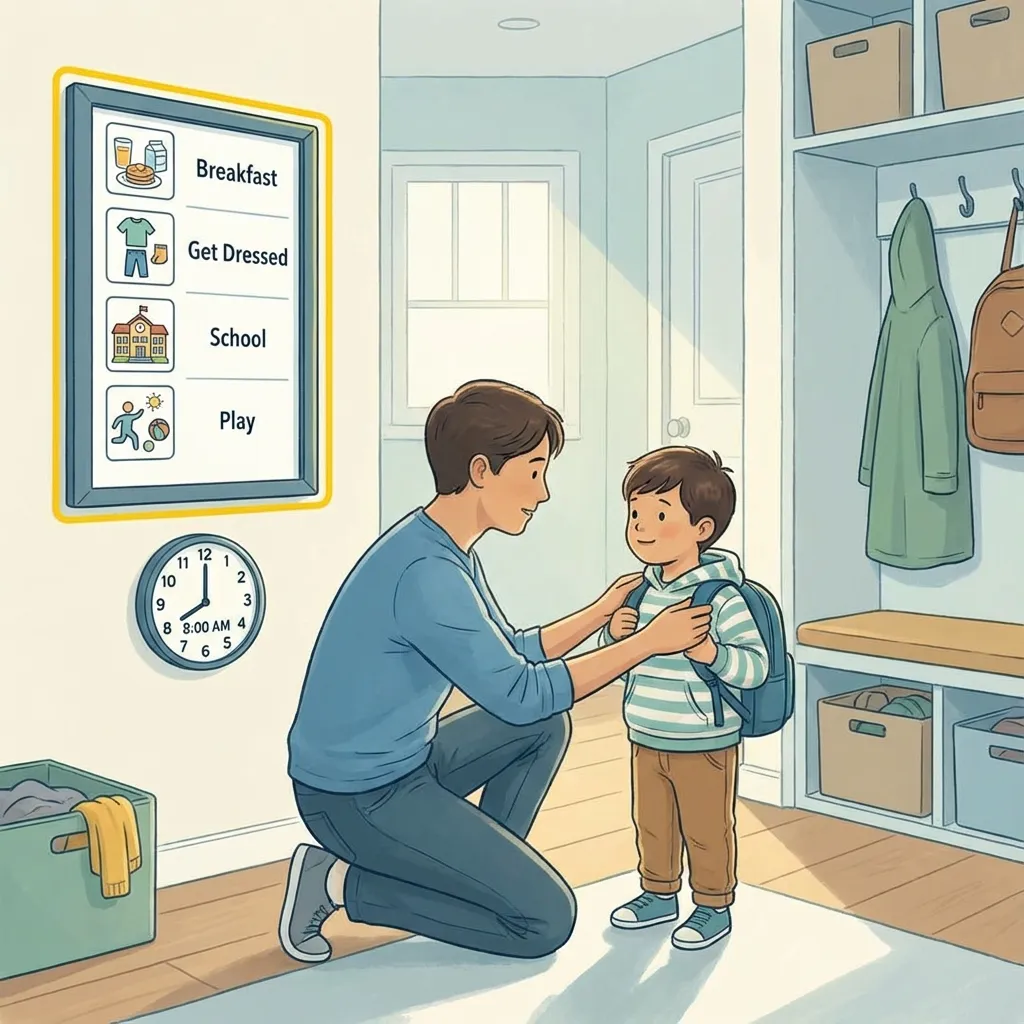
For many, routine is a need, not just a preference. It provides safety in a chaotic world. The CDC notes that routine struggles are common in autism.
This guide explains why routines matter. It offers BCBA-approved tips. We help you manage transitions and build flexibility.
Clinical Insight: Building Flexibility Through Structure
"Structure builds flexibility. It sounds odd, but it works. Secure children handle change better. At Buzz ABA, we create predictability. Then we teach coping skills for life's changes."
– Jennifer Harbour, M.S., BCBA, Clinical Director at Buzz ABA
Expertise in transition support and anxiety reduction
Why Routines Matter for Autistic Children
Research from the NIMH shows the world can feel overwhelming to autistic people. Routines help in several ways:
Benefits of Routine
- •Reduces anxiety: Knowing what comes next eliminates uncertainty
- •Conserves energy: Predictable situations require less mental processing
- •Builds independence: Familiar sequences become automatic over time
- •Creates safety: Consistent environments feel secure and manageable
- •Supports self-regulation: Predictability helps maintain emotional balance
Why Transitions Are Challenging
Transitions—moving from one activity, location, or situation to another—require several cognitive processes that can be difficult for autistic children:
Cognitive Flexibility
Shifting focus requires executive function skills. These skills develop differently in autism.
Sensory Processing
New places bring new sensory inputs. Processing this can be overwhelming.
Time Perception
Many autistic children sense time differently. This makes it hard to know when changes will happen.
Loss of Preferred Activities
Stopping a fun activity can be very upsetting. This is especially true during hyperfocus.
Creating Effective Visual Schedules
Visual schedules help with routines. They reduce anxiety. Research shows they increase independence.
Types of Visual Schedules
Object Schedules
Best for young children or those with limited symbolic understanding. Uses actual objects to represent activities.
Picture Schedules
Uses photographs or simple pictures to represent activities. Great for preschoolers and visual learners.
Written Schedules
Lists or checklists for children who can read. Can include times and detailed steps.
Digital Schedules
Apps and tablets that display schedules with timers and alerts. Especially appealing to tech-savvy children.
Transition Strategies That Work
1. Transition Warnings
Give advance notice before transitions occur:
- Use consistent time intervals (10 minutes, 5 minutes, 2 minutes)
- Visual timers make time concepts concrete
- Verbal warnings paired with visual cues
- Countdown songs or phrases
2. First-Then Boards
Show what needs to happen before a preferred activity:
- "First brush teeth, then story time"
- Keeps the motivating activity visible
- Reduces resistance to non-preferred tasks
- Teaches cause-and-effect and sequencing
3. Transition Objects
Physical items that bridge between activities:
- A special toy carried between locations
- Object representing the next activity
- Comfort item that provides continuity
- Sensory tool for self-regulation during transitions
4. Social Stories
Prepare for transitions with narrative explanations:
- Describe what will happen step by step
- Include how the child might feel
- Offer appropriate responses and coping strategies
- Read repeatedly before challenging transitions
Handling Unexpected Changes
While preparation helps with planned transitions, unexpected changes are inevitable. Building resilience to change is a gradual process that benefits from ABA therapy strategies.
When Changes Happen
- Acknowledge feelings: "I know this is hard. You expected something different."
- Explain simply: Provide clear, brief information about what's happening.
- Offer choices: Give control where possible within the new situation.
- Use coping strategies: Implement practiced calming techniques.
- Update visual supports: Modify the schedule to reflect the change.
- Praise flexibility: Celebrate attempts to manage the change, even imperfect ones.
Building Flexibility Over Time
Routine is important. However, building flexibility is also key. It helps children cope with inevitable changes.
Strategies for Building Flexibility
- 1.Start small: Introduce minor, low-stakes changes first (different cup, alternative route)
- 2.Practice with positives: Make some unexpected changes pleasant surprises
- 3.Create "flex time": Build scheduled times when activities vary
- 4.Celebrate success: Acknowledge and reward flexibility attempts
- 5.Model flexibility: Narrate your own adaptations to changes
Common Transition Challenges
Morning Routines
Mornings involve many transitions with time pressure. Try:
- Prepare as much as possible the night before
- Allow extra time and avoid rushing
- Use visual checklists for each step
- Consider sensory needs (clothing, lighting, sounds)
Leaving Preferred Activities
Stopping something enjoyable is especially hard. Try:
- Give multiple warnings with visual timer
- Find a natural stopping point when possible
- Photograph progress to return to later
- Make the next activity motivating too
School Transitions
School involves constant transitions. Collaborate with teachers to:
- Share visual schedule templates
- Request transition warnings and supports
- Allow transition objects if helpful
- Practice routes and transitions before school starts
Frequently Asked Questions
Why do autistic children struggle with transitions?
Autistic children often struggle with transitions due to difficulties with cognitive flexibility and sensory processing differences. They may also have a strong need for predictability.
Transitions disrupt their sense of security. They require quick mental adjustments that can be overwhelming.
Is strict routine good or bad for autistic children?
Routine provides security and reduces anxiety, which is beneficial. However, extremely rigid routines can limit flexibility.
This can cause distress when changes occur. The goal is balanced predictability with gradual exposure to manageable changes.
How can I prepare my autistic child for a new routine?
Prepare your child by introducing changes gradually. Use social stories and visible schedules.
Visit new locations beforehand if possible. Discuss what to expect in detail and allow time for questions.
Start Your Child's Journey Today
Buzz ABA provides comprehensive, evidence-based ABA therapy in Concord, Manchester, Nashua, and surrounding NH communities. Our neurodiversity-affirming approach helps children thrive.
Start Your JourneyRelated Resources
Executive Function Guide
Help with planning, organizing, and transitions.
Autism and Anxiety
Managing anxiety that often accompanies change.
Managing Meltdowns
Prevention and support strategies.
Sensory Issues Guide
Understanding sensory needs during transitions.
School Readiness
Preparing for school transitions.
Visual Supports Templates
Free downloadable visual schedules and transition tools.