Autism and Sleep: Understanding Problems and Finding Solutions
A comprehensive guide to sleep difficulties in autism – why they happen and what you can do to help your child (and family) sleep better.
Parents often share this struggle. It's 2 AM and the house is awake. Sleep issues affect the whole family. You are not alone in this.
We Understand: Our Family's Sleep Journey
"Sleep challenges were one of the first things we struggled with after our son's autism diagnosis at age 8. Those exhausting nights affected everyone in our family. Through research, trial and error, and working with specialists, we learned what worked for him – and that journey is part of what inspired us to found Buzz ABA. We want other families to have access to the evidence-based strategies that made such a difference for us."
– The Monico Family, Founders of Buzz ABA
How Common Are Sleep Problems in Autism?
Research in the National Institutes of Health shows 50-80% of autistic children have sleep problems. This is much higher than other children.
According to Autism Speaks, sleep issues often persist into adolescence and adulthood, making this a critical area for intervention.
Common Sleep Problems in Autism
- Sleep onset insomnia: Taking a long time to fall asleep (often 1-2+ hours)
- Night waking: Waking frequently during the night
- Early morning waking: Waking very early and unable to return to sleep
- Reduced total sleep: Getting less sleep than needed
- Irregular patterns: Inconsistent sleep-wake cycles
- Sleep anxiety: Fear or distress about bedtime
- Parasomnias: Night terrors, sleepwalking, sleep talking
Why Do Autistic Children Struggle with Sleep?
Multiple factors contribute to sleep difficulties in autism:
Biological Factors
- Melatonin differences: Lower or differently-timed melatonin production
- Circadian rhythm: Internal clock may function differently
- Genetics: Sleep-regulating genes may be affected
- Brain differences: Neural pathways involved in sleep
Sensory Factors
- Hypersensitivity: Small sounds, lights, or textures disturb sleep
- Seeking: May need specific sensory input to settle
- Bedding discomfort: Sheets, pajamas, temperature issues
- Environmental sensitivity: Room must be "just right"
Anxiety & Mental Health
- General anxiety: Worries that intensify at bedtime
- Fear of the dark: Heightened fears
- Separation anxiety: Difficulty being alone
- Racing thoughts: Difficulty "turning off" the mind
Co-occurring Conditions
- ADHD: Hyperactivity and difficulty settling
- GI issues: Discomfort affecting sleep
- Seizure disorders: Can disrupt sleep
- Sleep apnea: More common in autism
Difficulty with Transitions
Going to sleep is a big transition. Autistic children often find changes hard. They like predictability. Switching from awake to asleep can be tough.
The Impact of Poor Sleep
Sleep deprivation affects every aspect of functioning:
For the Child
- Increased behavioral challenges
- More frequent meltdowns
- Worsened anxiety and mood
- Decreased emotional regulation
- Impaired learning and memory
- Reduced attention and focus
- Increased hyperactivity
- Weakened immune function
For the Family
- Parent exhaustion and burnout
- Increased parental stress
- Marital/relationship strain
- Siblings' sleep affected
- Reduced patience and coping
- Work performance issues
- Social isolation
- Parent mental health impacts
Important: Better sleep helps everything else. It improves behavior and learning. It is worth the effort.
Strategies for Better Sleep
1. Create a Consistent Bedtime Routine
Predictability is key for autistic children. A consistent routine signals that sleep is coming.
- Use a visual schedule showing each step
- Keep the routine the same order every night
- Start at the same time each night
- Include calming activities (bath, reading, gentle music)
- Give warnings before transitions ("5 more minutes until bath")
- Keep the routine reasonable length (20-45 minutes)
2. Optimize the Sleep Environment
Create a sensory-friendly bedroom:
- Darkness: Blackout curtains, cover all lights (even tiny LEDs)
- Temperature: Cool room (65-70°F/18-21°C is ideal)
- Noise: White noise machine to mask sounds, or complete quiet
- Bedding: Comfortable textures – consider seamless pajamas
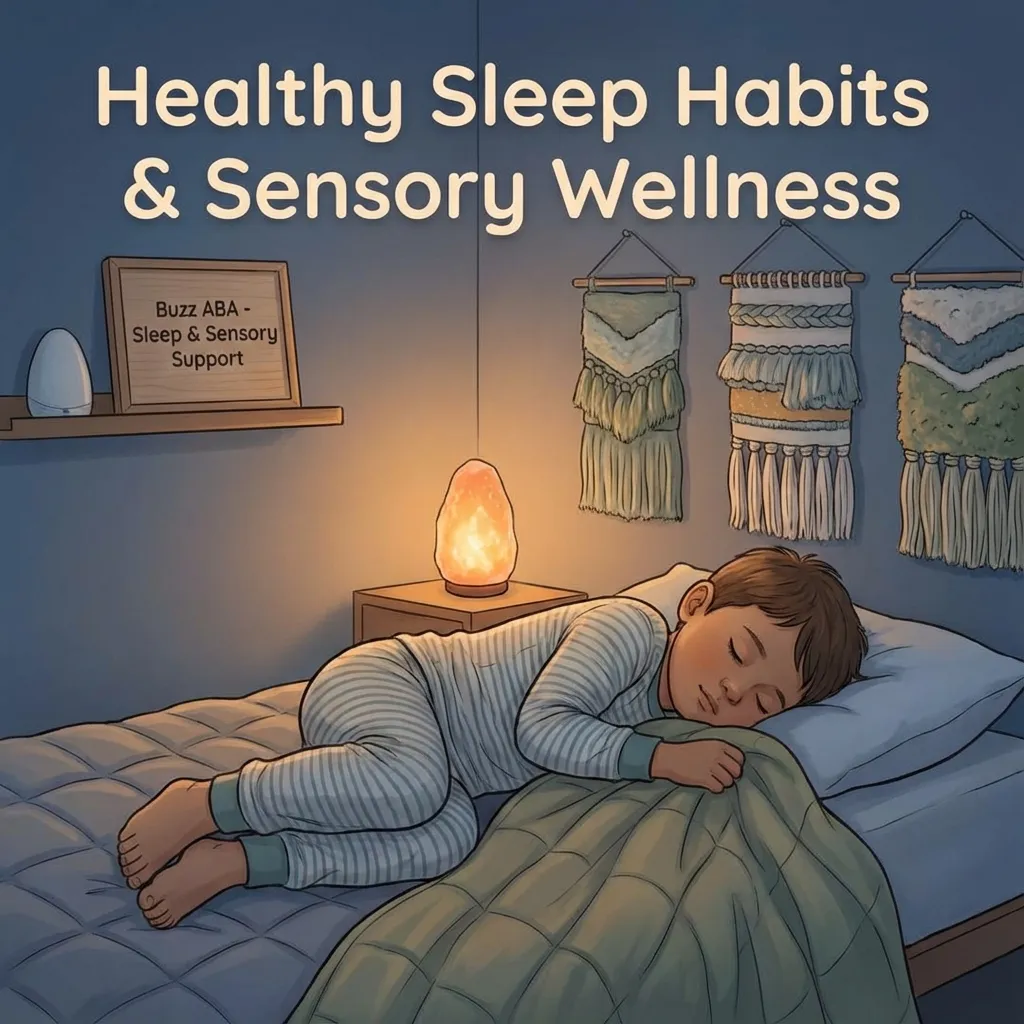
- Weighted blanket: Many find this calming (use appropriate weight)
- Minimal stimulation: Keep bedroom calm, remove toys if needed
3. Address Sensory Needs
- Deep pressure: Weighted blanket, compression sheets, firm tucking
- Proprioceptive input before bed: Heavy work activities, massage
- Calming sensory input: Lavender scents, soft textures
- Reduce sensory buildup: Calm evening activities
4. Manage Screen Time
- No screens at least 1 hour before bed (2 hours is better)
- Blue light from screens suppresses melatonin
- Content can be stimulating even if not "exciting"
- If screens are used, enable night mode settings
- Replace screen time with calming alternatives
5. Support Natural Melatonin
- Morning light: Bright light exposure in the morning helps set circadian rhythm
- Dim evening: Lower lights in the house as bedtime approaches
- Consistent wake time: Same wake time every day, even weekends
- Limit naps: Late naps interfere with nighttime sleep
6. Address Anxiety
- Teach and practice relaxation techniques
- Use social stories about bedtime
- Address fears directly and with patience
- Consider worry time earlier in the evening
- Comfort objects and transitional items
- Gentle, reassuring presence
Melatonin for Autism Sleep
Melatonin supplements are commonly recommended for autistic children with sleep difficulties. Research supports its effectiveness, but it should be used thoughtfully.
What the Research Says
- Studies show melatonin can reduce time to fall asleep
- Generally well-tolerated with few side effects
- May help increase total sleep time
- Works best with good habits
- Long-term safety data is still being studied
Important Considerations
- Consult your doctor first: Always get medical guidance
- Start low: Lower doses (0.5-1mg) are often effective
- Timing matters: Usually 30-60 minutes before desired sleep time
- Quality varies: Use pharmaceutical-grade when possible
- Not a magic fix: Best results when combined with sleep hygiene
- Monitor effects: Track what works for your child
When to Seek Professional Help
Consider consulting a professional if:
- Sleep problems persist despite implementing strategies
- Your child snores loudly or has breathing pauses (possible sleep apnea)
- Sleep deprivation is significantly impacting daily functioning
- You suspect a co-occurring condition is affecting sleep
- Behavioral interventions aren't making progress
- You need guidance on medication options
Who Can Help
Pediatrician
First stop for medical evaluation and melatonin guidance
Sleep Specialist
For persistent issues or suspected sleep disorders
BCBA
Behavioral strategies for bedtime routines
Occupational Therapist
Sensory strategies for sleep environment
Frequently Asked Questions
Why do autistic children have trouble sleeping?
Sleep difficulties in autism are often related to differences in melatonin production and circadian rhythm regulation. Sensory sensitivities and anxiety can also play a major role.
Difficulty with transitions and co-occurring conditions like ADHD are other common factors. Research shows up to 80% of autistic children experience sleep problems.
What are common sleep problems in autism?
Common issues include difficulty falling asleep (sleep onset insomnia), frequent night waking, and early morning waking.
Many children also experience irregular sleep patterns and sleep anxiety. Parasomnias like night terrors or sleepwalking can also occur.
Is melatonin safe for autistic children?
Melatonin is generally considered safe for short-term use in children. It is often recommended by pediatricians for sleep difficulties.
However, always consult your doctor before starting any supplement. Dosage and timing are critical. Melatonin works best when combined with good sleep hygiene practices.
How can I help my autistic child sleep better?
Start by establishing consistent bedtime routines using visual schedules. Create a sensory-friendly sleep environment that is dark, quiet, and cool.
Limit screen time before bed to avoid blue light exposure. Address sensory needs with tools like weighted blankets.
Reduce anxiety with calming activities. If needed, consult healthcare providers about sleep studies or melatonin.
How does poor sleep affect autistic children?
Poor sleep significantly impacts behavior and learning. It often leads to increased anxiety, irritability, and more frequent meltdowns.
It can also impair memory, attention span, and emotional regulation. Addressing sleep is often the first step to improving other challenges.
Start Your Child's Journey Today
Buzz ABA provides comprehensive, evidence-based ABA therapy in Concord, Manchester, Nashua, and surrounding NH communities. Our neurodiversity-affirming approach helps children thrive.
Start Your JourneyRelated Resources
Autism & Screen Time
Managing screens that may affect sleep patterns.
Routine & Transitions
Building consistent bedtime routines.
Sensory Issues in Autism
Understanding sensory sensitivities that may affect sleep.
Autism & Anxiety
Managing anxiety that can interfere with sleep.
Understanding Meltdowns
Sleep deprivation can increase meltdowns – learn more.
Behavioral Support Services
How our ABA therapy can help with sleep routines.