Social Skills Activities for Autistic Children: A Parent's Guide
Evidence-based games, strategies, and activities to help autistic children develop social skills and build meaningful connections.
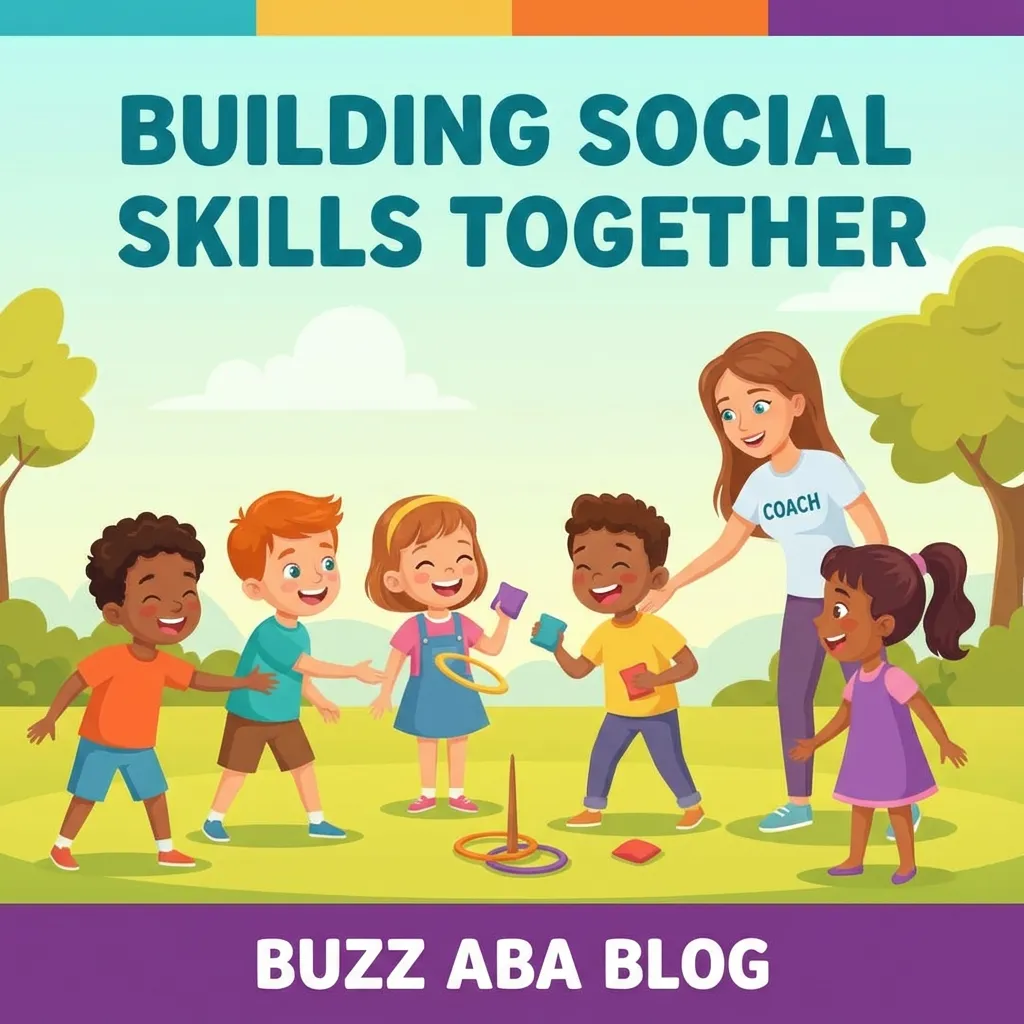
Clinical Insight from Jennifer Harbour, M.S., BCBA: "In my 20+ years of experience, I've seen that social skills development is rewarding. I focus on making social learning natural. Every child can develop meaningful connections. We meet them where they are and build on their strengths."
Understanding Social Skills in Autism
Social skills can be hard, but they can be learned. The NIMH says social challenges are common in autism. Support helps.
We teach patiently. We respect how your child learns. Socializing looks different for everyone. Our neurodiversity-affirming approach builds skills while honoring the child.
Core Social Skills to Target
Focus on these foundational skills for social growth:
Basic Interaction Skills
- Greetings and farewells
- Responding to name
- Sharing focus (joint attention)
- Taking turns in conversation
- Asking and answering questions
Nonverbal Communication
- Eye contact (if comfortable)
- Reading facial expressions
- Understanding body language
- Awareness of personal space
- Using gestures
Emotional Skills
- Identifying emotions
- Recognizing others' emotions
- Expressing feelings well
- Showing empathy
- Self-regulation
Play and Friendship Skills
- Sharing and teaming up
- Following rules
- Joining play
- Handling winning and losing
- Making friends
Evidence-Based Teaching Strategies
Social Stories
Social stories are short narratives about social situations. They describe how to respond. Research in the Journal of Autism supports them. Example topics:
- How to greet classmates
- What to do when a friend is sad
- How to ask someone to play
- Taking turns
- What to expect at a party
Video Modeling
Video modeling teaches through videos. Children watch and copy what they see. Autism Speaks supports this for visual learners.
- Basic modeling: Watching others
- Self-modeling: Watching themselves do it right
- Point-of-view: Seeing it from their own eyes
Role-Playing and Practice
Practicing in a safe place helps prepare for real life.
- Act out scenarios with family
- Use puppets or action figures
- Practice both roles
- Start with scripts, then use less help
- Give immediate feedback
Visual Supports
Visual tools make social ideas concrete:
- Emotion cards
- Visual rules for talking
- Social scripts
- Conversation wheels
- Personal space markers
Social Skills Activities by Age Group
Toddlers and Preschoolers (2-5 years)
- Parallel play activities: Playing alongside peers with similar toys
- Simple turn-taking games: Rolling a ball back and forth, stacking blocks together
- Imitation games: "Do what I do" with actions and sounds
- Emotion matching games: Matching feeling faces to situations
- Puppet play: Acting out simple social scenarios
- Music and movement: Circle time songs with social elements
- Bubble play: Requesting, waiting, sharing bubbles
School-Age Children (6-12 years)
- Cooperative board games: Games requiring teamwork to win
- Conversation card games: Topic starters and question prompts
- Emotion charades: Acting out and guessing feelings
- Comic strip conversations: Visual conversations about social situations
- Interest-based clubs: Social interaction around shared interests
- Structured play dates: Planned activities with clear beginning/end
- Social detective activities: Observing and interpreting social cues
- Video game-based social play: Multiplayer games with cooperation elements
Teens and Adolescents (13+ years)
- PEERS program activities: Evidence-based social skills curriculum
- Interest-based groups: Clubs, gaming groups, hobby meetups
- Role-playing complex scenarios: Job interviews, dating, conflict resolution
- Analyzing social situations: TV shows, movies as teaching tools
- Texting and social media practice: Understanding digital communication
- Community volunteering: Structured social interaction with purpose
- Self-advocacy practice: Explaining needs and preferences
Games and Activities That Build Social Skills
Turn-Taking Games
- Uno: Color/number matching with taking turns
- Connect Four: Strategy game with clear turns
- Candy Land/Chutes and Ladders: Simple games for beginners
- Jenga: Building cooperation and handling frustration
- Card games: Go Fish, Old Maid, Memory
Cooperative Games
- Forbidden Island/Pandemic: Work together to win
- Outfoxed: Cooperative mystery game
- Hoot Owl Hoot: Cooperative game for younger children
- Scavenger hunts: Team-based activities
- Building projects: LEGO collaborations, fort building
Emotion Recognition Activities
- Emotion bingo: Matching feelings to situations
- Feelings thermometer: Rating emotion intensity
- Photo sorting: Categorizing facial expressions
- Emotion storytelling: Creating stories about feelings
- "How would you feel?": Discussion cards with scenarios
Conversation Practice
- Conversation cubes: Dice with question topics
- Would You Rather: Decision-making and explaining preferences
- Interview games: Practicing asking and answering questions
- Story building: Taking turns adding to a story
- Topic menus: Choosing and staying on conversation topics
Setting Up Successful Play Dates
Structured play dates can provide valuable practice opportunities. Tips for success:
- Keep it short: Start with 30-60 minutes and gradually increase
- Plan activities in advance: Have 2-3 structured activities ready
- Choose the right peer: Understanding, patient children with similar interests
- Prepare your child: Review what will happen using social stories
- Reduce sensory challenges: Choose quiet locations, limit distractions
- Stay nearby: Be available to coach and redirect if needed
- End on a positive note: Stop before meltdowns or conflicts arise
- Debrief afterward: Discuss what went well and what was hard
Technology and Apps for Social Skills
Many autistic children are visual learners who respond well to technology-based learning. Useful apps and tools include:
- Social skill story apps: Interactive social stories
- Emotion recognition apps: Practice identifying facial expressions
- Video modeling apps: Watch and learn social scenarios
- Virtual social skills games: Practice in low-stakes virtual environments
- Video chat practice: Building comfort with remote communication
While technology can be helpful, it should complement rather than replace in-person practice and professional social skills support.
Social Skills Groups
Professionals lead these groups. They can be very helpful. The American Psychological Association supports their use.
Benefits of social skills groups include:
- Practice with peers who have similar challenges
- Immediate feedback from trained facilitators
- Structured activities with clear expectations
- Opportunity to generalize skills
- Sense of community and belonging
- Parent training component in many programs
The PEERS (Program for the Education and Enrichment of Relational Skills) program is one evidence-based social skills curriculum with strong research support for adolescents and young adults.
Tips for Parents
- Follow your child's interests: Build social activities around what they love
- Practice in natural settings: Use daily life as learning opportunities
- Be patient: Social skills take time and repetition to learn
- Celebrate small wins: Acknowledge progress, not just perfection
- Model social behavior: Narrate your own social interactions
- Coordinate with therapists: Reinforce skills being taught in therapy
- Respect differences: Not all social behavior needs to look neurotypical
- Focus on quality over quantity: Meaningful connections matter most
Frequently Asked Questions
What social skills do autistic children need to learn?
Key social skills for autistic children include:
- Turn-taking in conversations and play
- Reading facial expressions and body language
- Understanding personal space
- Making eye contact (as comfortable)
- Initiating and responding to greetings
- Sharing and cooperative play
- Recognizing emotions in self and others
These skills are taught systematically through evidence-based approaches like ABA therapy.
What are the best activities for teaching social skills?
Effective social skills activities include:
- Role-playing and social scripts
- Video modeling
- Social stories
- Structured play dates with clear activities
- Cooperative board games
- Emotion identification games
- Puppet play and dramatic play
Activities should be adapted to the child's specific interests and developmental level.
How can parents practice social skills at home?
Parents can practice social skills at home by:
- Incorporating practice into daily routines (e.g., greetings, mealtime conversations)
- Using visual supports and social stories
- Setting up structured play opportunities
- Practicing with siblings or understanding family members
- Using video games or apps designed for social learning
- Role-playing specific scenarios
Consistency and patience are essential for success.
Are social skills groups effective?
Yes, research supports the effectiveness of structured social skills groups. Benefits include:
- Opportunities to practice with peers in a controlled setting
- Receiving immediate feedback from trained professionals
- Learning through observation
- Generalizing skills to new people
The PEERS program for adolescents is one evidence-based example with strong research support.
How does ABA therapy address social skills?
ABA therapy addresses social skills using several strategies:
- Breaking complex social behaviors into teachable components
- Using systematic instruction and reinforcement
- Creating opportunities for practice in natural settings
- Teaching through play and preferred activities
- Using video modeling and social stories
BCBAs create individualized goals based on each child's unique needs.
Start Your Child's Journey Today
Buzz ABA provides comprehensive, evidence-based ABA therapy in Concord, Manchester, Nashua, and surrounding NH communities. Our neurodiversity-affirming approach helps children thrive.
Start Your Journey