Types of Autism Therapy: A Complete Guide for Parents
An evidence-based comparison of autism therapies to help you make informed decisions about your child's treatment.
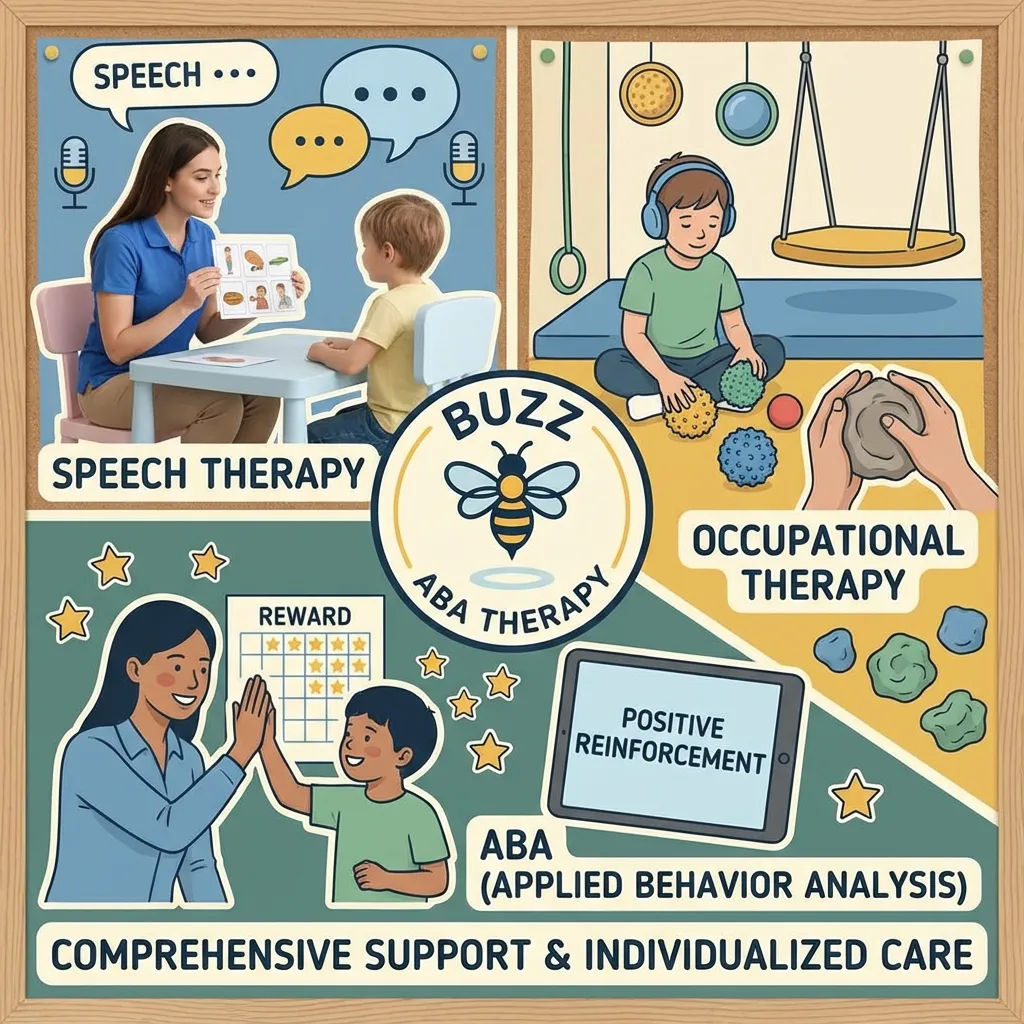
Understanding Autism Therapy Options
Diagnosis brings many choices. It can be confusing. The CDC says starting early helps. But which therapy is right?
This guide covers common therapies. We explain the evidence. We help you choose the best mix for your child.
Clinical Insight: Navigating Therapy Choices
"Diagnosis felt overwhelming. I had so many choices. I learned to check the research. I tell parents: look for proof. Ask about goals. Make sure it respects your child."
– Jennifer Harbour, M.S., BCBA, Clinical Director at Buzz ABA
Expertise in evidence-based autism interventions
Applied Behavior Analysis (ABA)
Evidence Level: Strong—ABA is the most researched autism intervention with over 50 years of evidence. Endorsed by the American Psychological Association, American Academy of Pediatrics, and US Surgeon General.
What Is ABA?
ABA uses learning principles to build helpful behaviors. It also reduces harmful ones. Modern ABA is tailored to each child. It is often play-based. It teaches real skills in everyday settings.
What ABA Addresses
- Communication and language
- Social skills
- Self-care and daily living skills
- Academic readiness
- Play skills
- Challenging behaviors
- Safety skills
Modern ABA Approaches
Today's ABA looks different from older approaches. Our neurodiversity-affirming ABA emphasizes:
- Play-based, natural learning
- Child-led interests and motivation
- Building skills rather than eliminating autistic traits
- Respecting assent and child agency
- Family involvement and training
- Focus on quality of life and autonomy
Who Provides ABA?
Board Certified Behavior Analysts (BCBAs) design and oversee ABA programs. Trained Registered Behavior Technicians (RBTs) often deliver the therapy. RBTs work under BCBA supervision.
Speech-Language Therapy
Evidence Level: Strong for improving communication in autistic children.
What It Addresses
- Expressive language (speaking, signing)
- Receptive language (understanding)
- Articulation and pronunciation
- Pragmatic language (social use of language)
- Augmentative and Alternative Communication (AAC)
- Feeding and swallowing (some SLPs)
When It's Helpful
Speech therapy helps children with language delays or echolalia. It also helps with speech clarity and AAC systems. Speech therapy works well with ABA. Many ABA programs include speech goals.
Who Provides It
Speech-Language Pathologists (SLPs) with the Certificate of Clinical Competence (CCC-SLP).
Occupational Therapy (OT)
Evidence Level: Moderate to strong, particularly for sensory integration and motor skills.
What It Addresses
- Sensory processing and integration
- Fine motor skills (writing, cutting, buttoning)
- Gross motor skills and coordination
- Daily living skills (dressing, feeding, hygiene)
- Visual-motor integration
- Self-regulation strategies
When It's Helpful
OT helps children with sensory issues, motor delays, or self-care struggles. Sensory integration therapy is one OT approach. It helps children process sensory input better.
Who Provides It
Occupational Therapists (OTs) or Certified Occupational Therapy Assistants (COTAs) under OT supervision.
Social Skills Groups
Evidence Level: Moderate—structured programs like PEERS have stronger evidence.
What It Addresses
- Peer interaction skills
- Conversation abilities
- Friendship development and maintenance
- Understanding social rules and expectations
- Perspective-taking
- Managing social situations
When It's Helpful
Social skills groups are particularly helpful for school-age children and teens who need peer practice opportunities. They work best when combined with individual therapy that builds foundational skills.
Other Therapy Options
Physical Therapy
Addresses gross motor skills, coordination, balance, and physical fitness. Helpful for children with motor delays or hypotonia (low muscle tone).
Play Therapy
Uses play to address emotional regulation, social skills, and processing of experiences. Our play-based learning approach incorporates therapeutic play within ABA.
Cognitive Behavioral Therapy (CBT)
Effective for anxiety and emotional regulation in verbal, cognitively able autistic individuals. Often modified for autism.
Music Therapy
Uses music to address communication, social, and emotional goals. Evidence is growing for its effectiveness with autism.
Developmental Models (DIR/Floortime, RDI)
Relationship-based approaches focusing on emotional and developmental foundations. Some parents use these alongside or instead of ABA. Evidence is emerging but less extensive than for ABA.
Therapy Comparison Chart
| Therapy | Primary Focus | Evidence Level | Hours/Week |
|---|---|---|---|
| ABA | Comprehensive skill building | Strong | 10-40 |
| Speech Therapy | Communication | Strong | 1-3 |
| Occupational Therapy | Sensory/Motor/Daily living | Moderate-Strong | 1-3 |
| Social Skills Groups | Peer interaction | Moderate | 1-2 |
| CBT | Anxiety/Emotional regulation | Moderate | 1 |
Choosing the Right Therapy Combination
Most autistic children benefit from multiple complementary therapies. Consider:
- Your child's specific needs: Focus on areas of greatest challenge
- Age: Intensive ABA is most beneficial for young children
- Evidence: Prioritize therapies with strong research support
- Practical factors: Insurance coverage, availability, family schedule
- Coordination: Ensure therapies work together, not in isolation
- Family capacity: Balance therapy with family time and child's stamina
Red Flags: Therapies to Approach with Caution
Be wary of treatments that:
- Promise to "cure" or "recover" autism
- Have no scientific evidence supporting them
- Require expensive supplements or special diets without medical basis
- Involve potentially harmful interventions (chelation, MMS, etc.)
- Pressure you to act immediately or use fear tactics
- Focus on making your child "indistinguishable" from neurotypical peers
Always consult with your pediatrician and seek therapies with evidence base and qualified providers.
Frequently Asked Questions
What is the best therapy for autism?
Applied Behavior Analysis (ABA) is the most researched and widely recommended therapy for autism, with decades of evidence supporting its effectiveness.
However, the "best" therapy depends on individual needs. Most children benefit from a combination of approaches. This often includes ABA, speech therapy, and occupational therapy tailored to their specific strengths.
What is ABA therapy and how does it help autism?
ABA (Applied Behavior Analysis) is an evidence-based therapy that uses principles of learning to improve socially significant behaviors.
For autism, ABA helps develop communication, social skills, self-care, academics, and play while reducing challenging behaviors. Modern ABA is individualized, play-based, and focuses on building skills rather than eliminating autistic traits.
What therapies are covered by insurance for autism?
Most states mandate insurance coverage for autism therapies, particularly ABA therapy. Speech therapy and occupational therapy are often covered under general health benefits.
Coverage varies by state and plan—check your specific policy and state autism insurance mandate. Medicaid also typically covers autism therapies.
How many hours of therapy does a child with autism need?
Research suggests 25-40 hours per week of ABA therapy for young children produces optimal outcomes, but recommendations are individualized. Factors include age, severity of symptoms, specific goals, family circumstances, and other therapies involved.
Some children do well with fewer hours, especially as skills improve. A BCBA will recommend hours based on individual assessment.
What is the difference between ABA and other autism therapies?
ABA is a comprehensive approach to behavior and skill building, while other therapies target specific areas: speech therapy focuses on communication, occupational therapy on sensory and motor skills, and social skills groups on peer interaction.
ABA can incorporate goals from all these areas. Most children benefit from multiple complementary therapies.
Start Your Child's Journey Today
Buzz ABA provides comprehensive, evidence-based ABA therapy in Concord, Manchester, Nashua, and surrounding NH communities. Explore our free parent resources and learn about early intervention benefits.
Start Your JourneyRelated Resources
Our ABA Therapy Services
Learn about our comprehensive approach.
Understanding Autism Regression
Signs, causes, and treatment options.
Late Autism Diagnosis
Finding support after diagnosis at any age.
Insurance Coverage Guide
Understanding your therapy benefits.
What to Look for in ABA
Choosing quality ABA providers.
Benefits of Early Intervention
Why starting early matters.