Top Social Skills Groups for Autistic Children in 2025: A Parent's Guide
Discover the best social skills groups for autistic children, including criteria for choosing the right program. Expert guidance on finding effective social skills development programs near you.
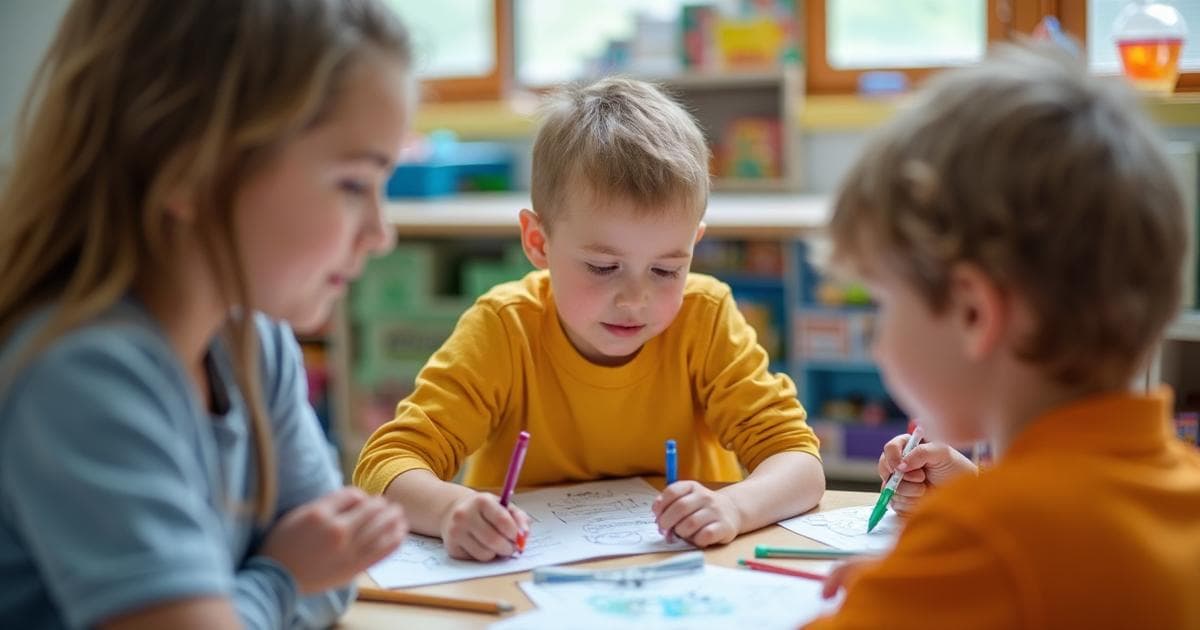
Social skills are key for autistic children. The CDC says social challenges are common in autism. This affects 1 in 36 U.S. children.
Expert Insight from Jennifer Harbour, M.S., BCBA
"Social skills grow through connection," says Jennifer Harbour, Clinical Director at Buzz ABA. "Groups help kids make real friends. Seeing a shy child start a conversation reminds me why this matters."
Social skills groups help kids practice with peers. The National Institutes of Health shows these groups improve social skills and reduce loneliness.
What Are Social Skills Groups for Autistic Children?
Social skills groups teach kids how to interact. Autism Speaks says these groups use small classes led by pros to teach social rules.
Key components of effective social skills groups include:
- Structured curriculum: Evidence-based lessons targeting specific social skills
- Peer interaction opportunities: Practice with same-age peers in controlled settings
- Direct instruction: Explicit teaching of social rules, expectations, and behaviors
- Role-playing and modeling: Demonstrations and practice of social scenarios
- Feedback and reinforcement: Immediate, constructive feedback on social performance
- Generalization activities: Strategies to transfer skills to real-world situations
Why Do Autistic Children Need Social Skills Groups?
Social situations can be hard for autistic kids. The NIMH lists common challenges:
- Difficulty reading facial expressions and body language
- Challenges understanding social rules and expectations
- Trouble initiating and maintaining conversations
- Difficulty sharing interests and engaging in reciprocal play
- Struggles with perspective-taking and understanding others' feelings
- Challenges navigating peer relationships and making friends
The American Psychological Association notes that help is key. Without it, social struggles can lead to sadness and isolation.
How Do Social Skills Groups Help Children with Autism?
Groups offer benefits that 1-on-1 therapy can't. Autism Speaks highlights these advantages:
Evidence-Based Benefits
- Peer modeling: Children learn by watching peers demonstrate appropriate social behaviors
- Natural practice opportunities: Real-time interaction with other children who understand their challenges
- Safe environment for mistakes: Supportive setting where children can practice without fear of judgment
- Motivation through shared experiences: Connection with peers who face similar challenges reduces isolation
- Generalization support: Skills learned in groups transfer more easily to school and community settings
A meta-analysis published in the Journal of Autism and Developmental Disorders found that children who participated in structured social skills groups showed significant improvements in social knowledge, social performance, and friendship quality compared to control groups.
Types of Social Skills Groups for Autistic Children
Several evidence-based social skills group models have demonstrated effectiveness for children with autism:
1. ABA-Based Social Skills Groups
ABA groups use proven methods to teach social skills. The U.S. Surgeon General supports this approach. Groups break skills into small steps.
- Discrete trial training for basic social responses
- Natural environment teaching during play activities
- Behavioral skills training with modeling, rehearsal, and feedback
- Token systems and reinforcement for social engagement
2. PEERS® (Program for the Education and Enrichment of Relational Skills)
PEERS® is for teens and young adults. Developed at UCLA, it lasts 16 weeks. Studies show it helps make and keep friends.
- Concrete rules for making and keeping friends
- Parent involvement with concurrent parent sessions
- Practice assignments for generalization
- Focus on real-world social situations
3. Social Thinking® Groups
Created by Michelle Garcia Winner, this method explains the "why" of social rules. It helps children understand social thinking.
- Visual vocabulary for abstract social concepts
- Expected vs. unexpected behavior framework
- Perspective-taking exercises
- Self-regulation and social awareness strategies
4. Lego®-Based Therapy Groups
This therapy uses Legos to build skills. Kids build together. This improves teamwork and problem-solving.
How to Choose the Right Social Skills Group
Selecting the right social skills group is crucial for your child's success. The Autism Speaks Resource Guide recommends evaluating programs based on several key criteria:
Essential Criteria for Quality Programs
- Evidence-based curriculum: Look for programs using research-supported methods (ABA, PEERS®, Social Thinking®)
- Qualified staff: Facilitators should hold credentials such as BCBA, licensed psychologist, or speech-language pathologist with autism training
- Appropriate group composition: Children should be matched by age, developmental level, and social goals
- Small group size: Ideal ratio is 4-6 children with at least 2 trained facilitators
- Parent involvement: Programs should include parent education and strategies for home practice
- Individualized goals: Each child should have specific, measurable social skills objectives
- Generalization strategies: Plans for transferring skills to school, home, and community settings
Questions to Ask Potential Providers
When evaluating social skills groups, ask these important questions:
- What evidence-based curriculum or approach do you use?
- What are the qualifications and training of group facilitators?
- How do you assess children before placing them in groups?
- How are individualized goals developed and measured?
- What is the group size and staff-to-child ratio?
- How do you involve parents in the program?
- How do you support generalization of skills outside the group?
- Do you accept insurance, and what is the cost?
Where to Find Social Skills Groups Near You
Several resources can help families locate quality social skills programs:
Step-by-Step Guide to Finding Local Groups
- Step 1: Contact your child's ABA therapy provider—many offer social skills groups as part of comprehensive treatment
- Step 2: Search the Autism Speaks Resource Guide for programs in your area
- Step 3: Ask your pediatrician or developmental pediatrician for referrals
- Step 4: Contact local autism organizations and parent support groups
- Step 5: Check with school districts about social skills programs
- Step 6: Search for BCBA-supervised groups through the BACB Registry
For families in New Hampshire, Buzz ABA offers comprehensive social skills development programs supervised by Board Certified Behavior Analysts (BCBAs) in Concord and surrounding communities.
What Age Should Children Start Social Skills Groups?
The CDC emphasizes the importance of early intervention, and this applies to social skills development as well. Different age groups benefit from tailored approaches:
Toddlers and Preschoolers (Ages 2-5)
- Focus on foundational skills: joint attention, imitation, play skills
- Parent-mediated interventions alongside group activities
- Play-based learning with structured social opportunities
- Early intervention programs that include peer interaction
School-Age Children (Ages 6-12)
- Structured social skills curricula targeting school-age challenges
- Focus on friendship skills, conversation, and group participation
- Integration with school social opportunities
- Development of emotional regulation and problem-solving skills
Teens and Young Adults (Ages 13+)
- PEERS® and similar programs designed for adolescents
- Focus on dating, employment, and adult social situations
- Technology-assisted social skills practice
- Transition planning and community integration
Real Success Stories: Social Skills Groups Making a Difference
Research and clinical experience demonstrate the transformative impact of quality social skills programming. Here are examples of outcomes families can expect:
Case Study 1: Building First Friendships
A 7-year-old boy with autism who struggled to connect with classmates participated in an ABA-based social skills group for 12 weeks. After learning specific conversation starters, turn-taking in play, and reading social cues, he successfully initiated his first playdate—a milestone his parents never thought possible.
Case Study 2: Reducing Social Anxiety
A 10-year-old girl experienced severe anxiety in social situations, often refusing to participate in group activities at school. Through a Social Thinking® group, she learned to identify expected and unexpected behaviors, reducing her anxiety and increasing participation in classroom activities by 80%.
Case Study 3: Teen Transition Success
A 15-year-old completed the PEERS® program and reported significant improvements in friendship quality. Research shows these gains are maintained long-term, with participants demonstrating better social functioning years after completing the program.
How to Support Social Skills Development at Home
The Autism Speaks Family Support resources emphasize that parent involvement is crucial for generalizing social skills. You can also try these social skills activities for autism at home. Here are strategies to reinforce learning:
- Practice role-playing: Rehearse social scenarios your child will encounter
- Use visual supports: Create social stories and visual schedules for social events
- Arrange playdates: Provide structured peer interaction opportunities
- Video modeling: Watch and discuss appropriate social behaviors in videos
- Positive reinforcement: Celebrate social successes, no matter how small
- Debrief after social situations: Discuss what went well and what could improve
- Collaborate with therapists: Communicate regularly with group facilitators about goals and progress
Insurance Coverage for Social Skills Groups
Many insurance plans cover social skills groups when provided as part of ABA therapy. The American Medical Association recognizes the importance of behavioral health services, and most state insurance mandates require coverage for autism treatment, including social skills intervention.
To maximize insurance coverage:
- Verify that your plan includes ABA therapy benefits
- Ensure the group is supervised by a BCBA for insurance billing
- Request a letter of medical necessity from your child's physician
- Document specific social skills goals tied to functional outcomes
- Keep records of progress to demonstrate treatment effectiveness
Comparison of Social Skills Group Approaches
Understanding the differences between approaches can help parents choose the best fit:
| Approach | Best For | Key Features | Evidence Level |
|---|---|---|---|
| ABA-Based Groups | All ages, foundational skills | Systematic teaching, reinforcement | Strong |
| PEERS® | Teens and young adults | Concrete friendship rules, parent involvement | Strong |
| Social Thinking® | School-age children, verbal learners | Cognitive approach, visual vocabulary | Moderate |
| Lego® Therapy | Ages 6-16, collaborative play | Play-based, collaborative building | Moderate |
Getting Started with Social Skills Groups
Taking the first step toward social skills support can feel overwhelming. Here's a simple action plan:
- 1. Assess your child's needs: Identify specific social challenges and goals
- 2. Research local options: Use the resources above to find programs in your area
- 3. Schedule assessments: Many providers offer free consultations to determine fit
- 4. Review insurance coverage: Contact your insurance provider about autism treatment benefits
- 5. Start early: The sooner intervention begins, the better the outcomes
At Buzz ABA in Concord, New Hampshire, our Board Certified Behavior Analysts (BCBAs) design individualized social skills programs that address each child's unique needs. We offer in-home and community-based services throughout New Hampshire, including social skills training as part of comprehensive ABA therapy.
Start Your Child's Journey Today
Buzz ABA provides comprehensive, evidence-based ABA therapy in Concord, Manchester, Nashua, and surrounding NH communities. Our neurodiversity-affirming approach helps children thrive.
Start Your JourneyFrequently Asked Questions
What age is best to start social skills groups for autism?
Early intervention is key. Children as young as 2-3 can benefit from foundational social skills programs, while structured groups become particularly effective around ages 5-6 when children have developed basic language and play skills. However, social skills groups benefit individuals of all ages, with programs like PEERS® designed specifically for teens and young adults.
How long do social skills groups typically last?
Most structured programs run for 8-16 weeks, with sessions lasting 60-90 minutes once or twice per week. However, ongoing social skills support is often beneficial, with many children participating in groups for extended periods as they work on increasingly complex skills.
Are social skills groups covered by insurance?
Yes, when social skills groups are provided as part of ABA therapy and supervised by a BCBA, they are typically covered under most insurance plans' autism treatment benefits. Contact your insurance provider to verify your specific coverage and any prior authorization requirements.
What credentials should social skills group facilitators have?
Look for facilitators with credentials such as Board Certified Behavior Analyst (BCBA), licensed psychologist, licensed clinical social worker, or speech-language pathologist with specific training in autism intervention. Programs should also have structured curricula based on evidence-based practices.
How do I know if a social skills group is working for my child?
Quality programs should provide regular progress reports with measurable data on your child's social skills goals. Look for improvements in specific behaviors (initiating conversations, taking turns, reading social cues), increased participation in social activities, and feedback from teachers and family members about social improvements outside the group setting.