Identifying Mild Symptoms of Autism
While major signs of autism are easier to identify, recognizing mild autism symptoms can be trickier. Learn about autism spectrum disorder level 1 and the traits to look for.
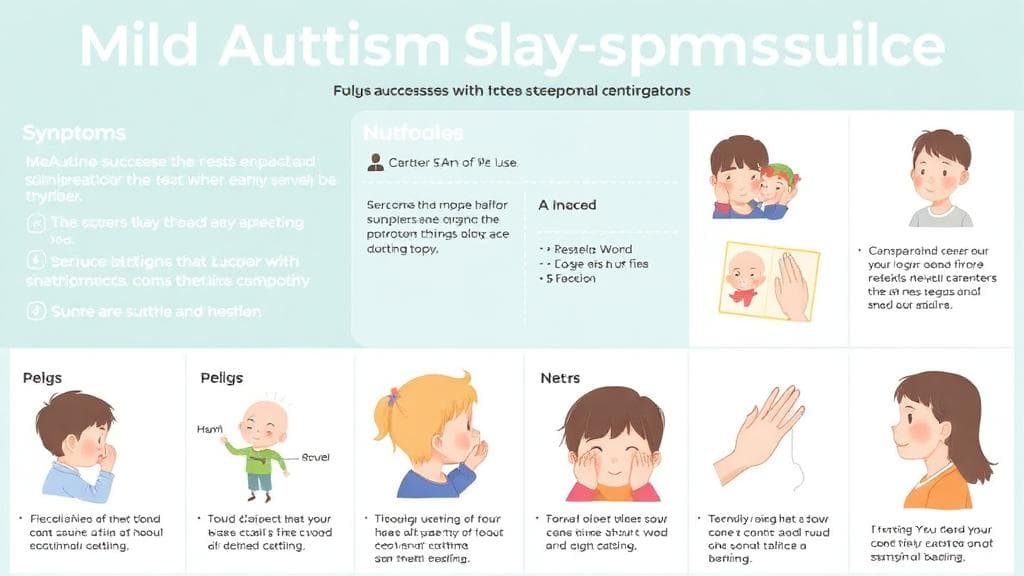
While major signs of autism are easier to identify, things get trickier when you want to find signs of mild autism. But how can we define mild autism? It's the autism spectrum disorder level 1. Kids/adults that have mild autism will usually have noticeable traits, which they mask with ease. They also have very low support needs. Yet there are still those well-known autism challenges, like reading any social cues, a lack of social interaction, and so on.
"Our son was diagnosed at age 8 with what would now be called Level 1 autism. For years, the signs were subtle enough that they were dismissed. Looking back, understanding that 'mild' doesn't mean 'easy' has been crucial. Even individuals with lower support needs face real challenges that deserve recognition and appropriate support. That's why we founded Buzz ABA – to ensure every child gets the help they need."
– The Monico Family, Founders of Buzz ABA
No Eye Contact and Feeling Distant
It's very common for someone who has mild autism not to maintain or keep any eye contact at all. They also tend to be very distant, "in their own world", so to speak. In fact, most people with autism rarely escape from their own world and usually ignore people speaking with them.
They Enjoy Routines and Won't Adapt to Changes
Another common mild autism trait comes in the form of having a routine. Not only that, but the person with mild autism usually stays very attached to their routine. And that means they don't like changing it, nor do they find it easy to change activities. Instead, they always try to maintain their routine as much as possible.
Embracing Social Situations
A lot of the time, people with autism will find it difficult to connect with others, and they find it hard to see someone else's perspective. In addition, they will find it hard to understand social expectations and rules.
Difficulties in Creating and Maintaining Relationships
It's a common mild autism trait, and it's valid when it comes to making friends, talking, and sharing their interests. We should also note that people with mild autism usually tend to be either indifferent to sensations or highly sensitive. Usually, it's one of the two, but it's always near these extremes.
Repeated Words, Movements, or Actions
Mild autism also shares other traits with severe autism, such as repeatability. Yes, kids or adults with mild autism enjoy repeating words, movements, and activities. That gives them a sense of calmness, even if it does seem strange to someone from the outside looking in.
Very Limited Range of Interests
We should also note that someone with mild autism also tends to have a very limited range of interests. With that in mind, they do have in-depth knowledge when it comes to those interests, so that's a thing to keep in mind.
Conclusion
These are some of the most common mild autism symptoms you should be looking for. One thing to note is that some traits will usually be more obvious than others. Working closely with a therapist and trying to identify the right treatment for your child is ideal, as it can help unlock their potential and surpass any difficulties!
Start Your Child's Journey Today
Buzz ABA provides comprehensive, evidence-based ABA therapy in Concord, Manchester, Nashua, and surrounding NH communities. Our neurodiversity-affirming approach helps children thrive.
Start Your Journey